
If You Run a Menu, This Page Is for You
Menuvanta exists to hold full menus - prices and the practical details included - in one destination. This page is written for the people who put those menus together: cafés, restaurants, bars, bakeries and every other kind of food place.
A presence here is a matter of clear, complete information and nothing else. There is no score attached to your room, no league table it is entered into, and no comparison drawn between your card and anybody else’s. What the entry does is show what you serve, in the order and the words you serve it in.
That means there is nothing to compete for and nothing to win. A venue whose menu is held completely and accurately has already got everything Menuvanta has to offer.
The page is for you whether the room is small or large, as long as food or drink is served from a menu:
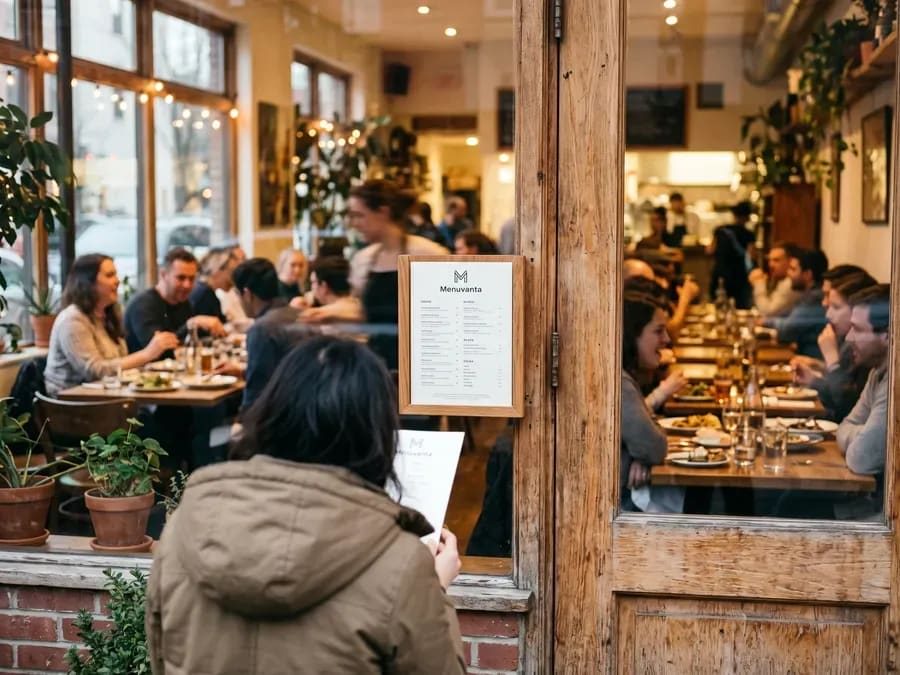
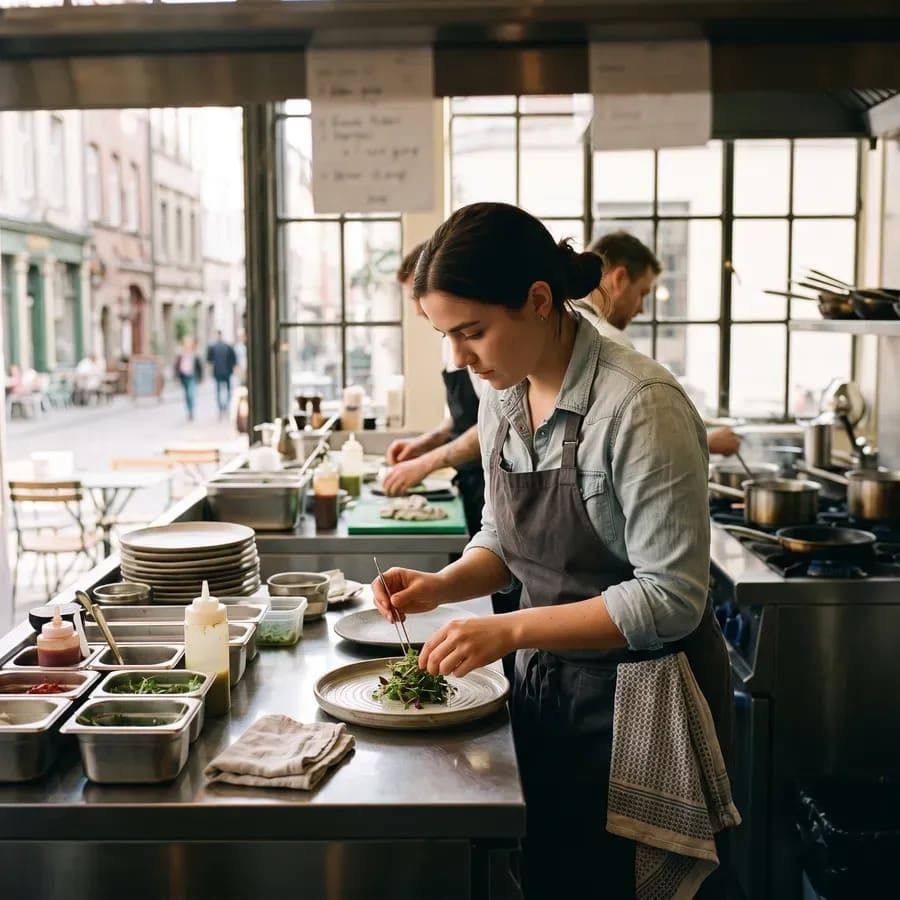

What a Clear Presence Here Offers Your Venue
Guests who have read a full menu with prices and core details before they arrive turn up with fewer misunderstandings, steadier expectations, and questions shaped by what you actually serve.
- The range is visible before anyone walks in - the shape of the whole card reads at a glance, instead of the two or three dishes that happened to get photographed.
- Fewer questions that start from the wrong picture - the basic ones, about whether something is served at all, are usually answered before they are asked.
- A steady reference when the card moves - one place that reflects what you are serving now, rather than an old copy still circulating somewhere else.
- Plain language throughout - the menu is presented as written, with no adjectives added on your behalf and no atmosphere invented around it.
None of that is a promise about trade. Being here does not guarantee popularity, does not place you above or below anyone, and cannot be climbed - there is nothing to climb. It simply makes your own menu easier to reach and easier to read.
What a Complete Menuvanta Entry Holds for Your Place
This is what a guest sees when they open your menu page here - the parts of the entry, and where you can help make sure each of them is right.
The parts of an entry
- Venue name and kind of place
- How the room is named, and what sort of room it is, so people arrive expecting the right kind of card.
- The full menu content
- Every section as you provide it, or as sourced from the menu you publish - carried across whole rather than trimmed down to highlights.
- Prices exactly as you print them
- Shown inside the entry in your own presentation. Nothing is converted, rounded or averaged, and no figure is lifted out into a listing.
- Address and the plain factual details
- The particulars that place the room, spelled the way you spell them.
- Badges and metadata where they apply
- Short factual markers about how the place serves, kept clearly apart from anything you wrote yourself.
Where you can help
- Send the current menu whenever the card settles into a new shape.
- Flag the larger moves - a new section, a seasonal card, a kitchen that has changed direction.
- Confirm the plain facts: how the name is spelled, how the address should read, what kind of place this counts as.
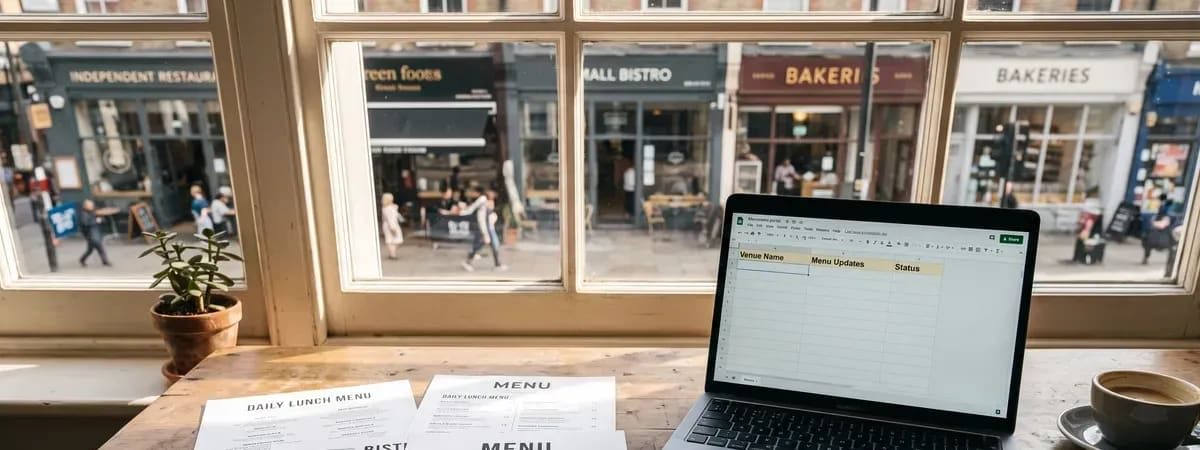
Ways to Add, Claim, or Correct Your Menu
There are only a few routes, and which one you take depends mostly on whether the room already appears on Menuvanta. They tend to run in this order.
-
Check whether the room is already here
Search the run on Every Menu Open Here first. If the room is already carried, correcting an entry that exists is quicker and cleaner than starting a new one.
-
Ask to claim an entry that exists
If the entry is yours, say so, and say who you are in relation to the room. Claiming it puts you on the other end of any question about how the menu appears.
-
Request a correction or an update
Tell us what is wrong or what has moved, and what it ought to say instead. Corrections are made against the menu itself, so pointing at the card is the fastest route.
-
Put forward a menu not yet held here
Send the card as you publish it, along with the plain details that place the room. That is enough to begin with; anything missing can be settled afterwards.
-
Answer the follow-up if one arrives
Sometimes a card raises a question - a section that reads two ways, a detail that cannot be confirmed from the menu alone. A short reply usually settles it.

Two things worth knowing
You may be asked to confirm that you are authorised to speak for the place. It is a short question, and it protects the room as much as it protects the entry.
Changes are made on the basis of menu information that can be checked. A request that cannot be grounded in the card itself may take longer, or may not be applied at all.
What to Expect From Menuvanta - and What Remains With You
The aim is to present menus accurately and completely. What no destination can do is follow every change as it happens inside a room - a dish pulled at midday, a section rested for a week - so an entry reflects the menu as it was last confirmed, and the room stays the final word on any given day.
What Menuvanta takes on
- Your menu text and your prices reflected faithfully, in your own presentation.
- Corrections considered, and applied where they can be verified against the card.
- Your room described in plain, neutral language, with nothing invented to fill a gap.
- A single, consistent place where the whole menu can be read at once.
What stays with you, or elsewhere
- Bringing people through the door. A presence here is not marketing and makes no promise about trade.
- Reservations, orders and deliveries - those stay between you and your guests.
- Rewriting a menu into promotional language, or setting your room against another one.
- Deciding, on the day, what is actually available. That has to be yours.
When You Need to Talk Through the Details
Some situations do not fit a short request. A group running several rooms under one name, a kitchen that rewrites its card faster than most, a menu whose structure does not map onto sections at all - these are worth a conversation rather than a one-line note.
Take those to Open Line and describe the situation in your own terms. Nothing needs to be formatted a particular way; what helps is knowing which room you are speaking for and what makes it awkward to represent.
Getting a real venue represented accurately is the whole point of the exercise.
Messages from venue teams are read by the people responsible for how menus appear here, and they are read with that aim in front of them.